West Michigan PBL Network
  • Home
  • Who We Are
  • PBL Experiences
    • ELE PBL Experiences
    • MS PBL Experiences
    • HS PBL Experiences
  • Resources
  • Protocol Examples
  • Community / Industry Partners
                                     Finding My Path
                                                                By:  Eric Wilkinson & Cathy Engel

Project at a Glance :

This PBL is designed for English 3 Students (10th &11th graders) during the unit The Highway with the central text being Into the Wild.  The unit has a heavy focus on transcendentalism, survival, and the idea of identity through the journey. The project focuses on mainly  nonfiction/informational text and speaking and listening standards.
       
Driving Question:

How can teens find their way (on their career path)?

          

Picture
Standards:
  • RI.11-12.1, RI.11-12.7, W.11-12.2, W.11-12.4, W.11-12.5, W.11-12.6, W.11-12.7, W.11-12.8, SL.11-12.2, SL.11-12.4,  and SL.11-12.5
Team / Culture Building:
  • Values Cards- Students need to be on the same page, especially when it comes to helping others through difficult situations. 
  • Maker’s Map: We’ll use this to get to know our teams by putting challenges we’ve faced and successes we’ve enjoyed on our map. We’ll also add hopes and fears to these maps.
  • 6 Word Memoir- who we are, and what we can learn from one another.
Picture

Entry Event:

  1. Individuals  must pass this Kahoot. As students “pass,” they join their team.
  2. Small groups  imagine they are stranded on a desert island. They create four “laws” to govern their new society and determine consequences for breaking the laws. These laws must make their team more likely to survive.
  3. Teams create a flag representing these values and laws (visually) and get a judge’s approval.
  4. Team must “survive a month” on this simulation. What was hard?
  • Individuals create an application video on Flipgrid. This video should convince their future teammates that they should hire them for this project. (Imagine application videos to be on Survivor.
Picture
Stakeholders:
  • Local business partner
  • Stakeholder map entries
Empathy Building:
  • Empathy Map/Customer Profile
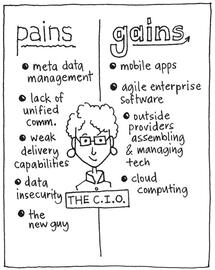
  • Pains & Gains charts
  • Directed Storytelling & Interviews
  • Save the Last Word protocol
  • Fireside Chat
  • Shadowing & Touchstone Tour​
Picture
Inquiry / Need to Knows:
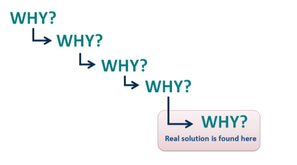
  • ​5 Whys and QFT, invited school librarian to teach students research skills using our school databases.​
Picture
  • Mental Mapping to break research into branches
  • Connecting to stakeholders in the community will be important too
  • Elevator Pitch to convince the class they are pursuing a key part of the problem. Peer audience can contribute lingering questions
  • Online tools for inquiry:
         Holland Code Career and
         MyNextMove.Org
Picture
Incubation:
  • Analyzing Analogies
  • Combin-Ide-Ation
  • Yes, and Can It​
Picture
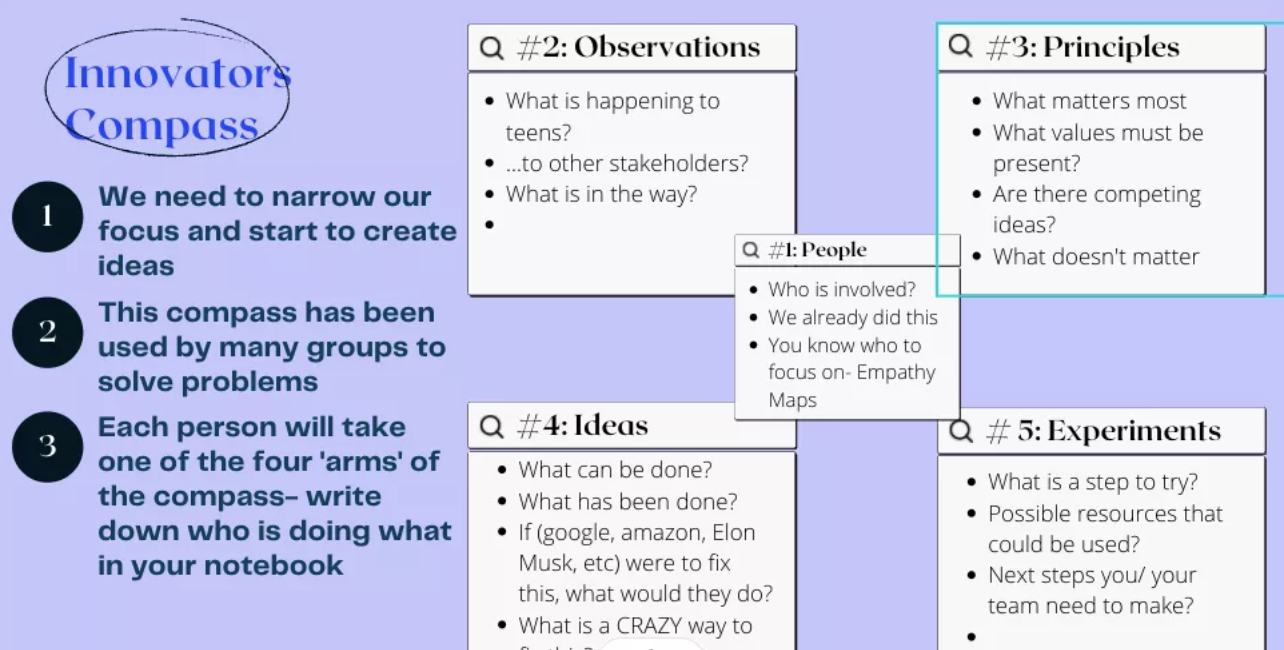
  • How would ________ solve this?
  • Share  two contrasting solution examples with students, including an experience to teach students vs. making a poster. Which would be more memorable?
Checking in:  
  • During investigation, students will use note-catchers to collect their research. They’ll conga-line share key points of their research. 
  • Before interviewing, they’ll create a mind map of their planned interview questions.
  • Revisit empathy map/customer profile after conducting research.
  •  Assess  process the throughout the unit,  Each stage will be assessed and offer the opportunity to “get-back-on-track” with revisions and corrections.​
Picture
Picture

Picture
Solution Building:
  •  Use Michael Jr's  “Know Your Why” as they start to build their solution ideas.
  • Conga Line Sharing
  • Storyboarding solution ideas
  • Metaphor Making
  • Elevator Pitch/Poster Session
  • Saturate and Group ideas
Critique and Revision: 
  • Use Final Four Bracketology to narrow ideas
  • NUF Test with explanation of why their ideas are the BEST
  • I Like/I Wish/What if...
  • Love Letter/Breakup Letter
  • Seeking Skeptics
  • Critical Friends (of the elevator pitch on FlipGrid)
  • Speed dating with students from another class to give feedback on solution ideas prior to final presentations.
Picture
Authentic Audience:
  • Local business partner
  • Stakeholder map entries
Final Presentation:
  • Students may create a career orientation video, job fair advertising, and/or recruiting video for CTC
  • As students get to know their particular authentic audience, they’ll choose the best form to communicate their solution(s) with this audience. The class will generate ideas (see above) while encouraging students to find the best genre for presenting solutions.
Picture
Click here for teacher's full plan.

​
Reflection and Feedback:
  • The authentic audience will use a version of the NUF Test to provide feedback to the students. The teams and educator will use a slightly more detailed rubric for feedback.
  • Students will reflect throughout the process. They’ll write to synthesize their research with the literature, they’ll record FlipGrid videos to reflect on interviewing, they’ll create Mood Boards of career paths. At the end, students will score their group using the rubric and reflect using Start-Stop-Continue.​

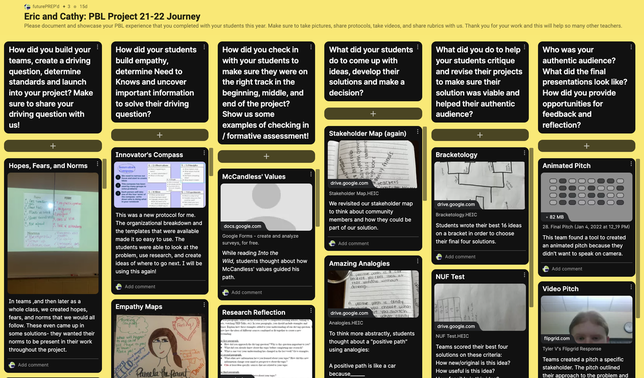
Click here to follow the teachers' Journey through PBL on Padlet . . .
Picture
Meet the Educators:

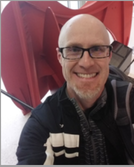
​Eric Wilkinson teaches English (and sometimes Math) at West Ottawa High School in Holland, MI. Cathy Engel teaches English 11 and 12 at West Ottawa High School in Holland, MI.  
​​

     "PBL engages students in creating meaningful work by applying their learning to problems they care about.  ~E. Wilkinson

           "PBL helps me bridge the gap between curriculum and the real-world." ~C. Engel
Picture
Picture
Picture
Picture
Picture
Picture
Picture
Picture
Proudly powered by Weebly
  • Home
  • Who We Are
  • PBL Experiences
    • ELE PBL Experiences
    • MS PBL Experiences
    • HS PBL Experiences
  • Resources
  • Protocol Examples
  • Community / Industry Partners