West Michigan PBL Network
  • Home
  • Who We Are
  • PBL Experiences
    • ELE PBL Experiences
    • MS PBL Experiences
    • HS PBL Experiences
  • Resources
  • Protocol Examples
  • Community / Industry Partners
                           Tech Toys for All
                                                           By:  Robert Barrett

Project at a Glance :

​
Students design and modify adapted toys to address the needs of people who cannot interact with tech as it was originally designed. 
       
Driving Question:

As engineers, how can we use our knowledge of circuitry waves and digital communication to create or improve an adapted toy?           

Picture
Standards:
  • DCI: PS4.C Information Technologies and Instrumentation., PE’s (4-1) - (4-5),SEP’s: (1) Ask Q’s / Define Probs, (2) Develop & use models, (8) Obtain, Evaluate & Communicate Info
Team / Culture Building:
  • Current approach: Student choice*   *as long as they can do work
  • Culture: Group contract w/ expectations & roles, conflict mediation
  • Potential ideas: Fishbowl and troubleshooting as a class?
Entry Event:
  • Visit / Zoom meeting with kids who need modified toys OR watch video if it’s not possible / safe / legal
  • Trip to Meijer or online store to get toys for kids with disabilities (see what’s out there and begin to understand the limited resources available)
  • Interview with parents of children with disabilities or a person with disabilities.​
Picture
Picture
Stakeholders:
  • Community members who could benefit from adapted toys. 
Empathy Building:
  • Create an Empathy Map, students work in teams, each thinking from the POV of various stakeholders to develop empathy maps for that stakeholder.
  • Create a class anchor chart to document key areas to keep in mind when considering all stakeholders needs.
  • Have students interact with / build for a specific audience 
Inquiry / Need to Knows:
  • Provide all students with a copy of the DQ
  • Underline and redefine key terms and ask clarifying questions
  • Investigate teacher provided to examples 
  • Groups will restate the DQ in a way that makes sense to them.
  • Kick off with the Hero’s journey activity
  • Mini labs and demos ​
Picture
  • Conduct interviews with stakeholders 
  • Research and report-out findings
  • Fishbowl / spider-web discussions to share information with others
Picture
Incubation:
  • Fortress of Solitude - Students start as individuals visiting their source of inspiration and empowerment. They come up with ideas at this stage. The ideas could be related to additional features to add to toys.
  • Ask questions How would _(a hero from your fortress of solitude)___ solve this?​​
Picture
  • The Anti-Problem (worst solution to the problem - may not be good fit)
  • Idea Quota - groups generate at least 50 solution ideas
  • Saturate and Group ideas into categories
Picture

Picture
Solution Building:
  • Go through the NUF Test to compare ideas based on project requirements.
  • Use the Dot Voting and $100 Test to narrow down ideas. 
  • Distribute the Seeking a Skeptic survey to determine final solution ideas, followed by crating a pitch to share with stakeholders.
Critique and Revision: 
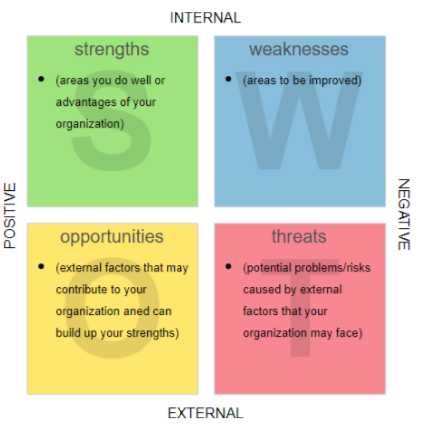
  • Provide feedback using the SWOT analysis protocol​
Picture
  • Use feedback from authentic audience to revise solution ideas.
  • Critical Friends with other groups, peers, or audience members​
Picture
Authentic Audience:
  • Audience will ideally be parents / teachers / occupational therapists who work with people with disabilities
  • Community members who could benefit from adapted toys. 
Picture

Final Presentation:
  • Students will ideally collaborate with the KCTC Design Lab to build their adapted toys. Choice will come in the form of picking the best solution they can come up with to make the toys truly adapted.
  • Use Flipgrid  to share-out solutions with audience. Ideal scenario would be sharing in person depending on the audience members’ availability.​
Picture
Click here for teacher's full plan.

​
Reflection and Feedback:
  • Develop rubric to give grades based on individual work as well as collective group work.
  • Students will have a hand in developing rubric, have voice in the grade they feel they have earned, and an opportunity to speak about group dynamics in considering grades. ​


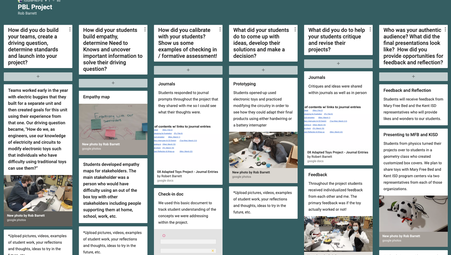
Click here for the  teacher's Journey through PBL on Padlet.
Picture
Meet the Educator:
Robert Barrett teaches at Kent Innovation HS Physics. 

      "It's a relevant and powerful way to connect kids with content."
Picture
Picture
Picture
Picture
Picture
Picture
Picture
Proudly powered by Weebly
  • Home
  • Who We Are
  • PBL Experiences
    • ELE PBL Experiences
    • MS PBL Experiences
    • HS PBL Experiences
  • Resources
  • Protocol Examples
  • Community / Industry Partners