West Michigan PBL Network
  • Home
  • Who We Are
  • PBL Experiences
    • ELE PBL Experiences
    • MS PBL Experiences
    • HS PBL Experiences
  • Resources
  • Protocol Examples
  • Community / Industry Partners
                              A Slay Reading Month
                                                                          By:  Mary Ritsema

Project at a Glance :

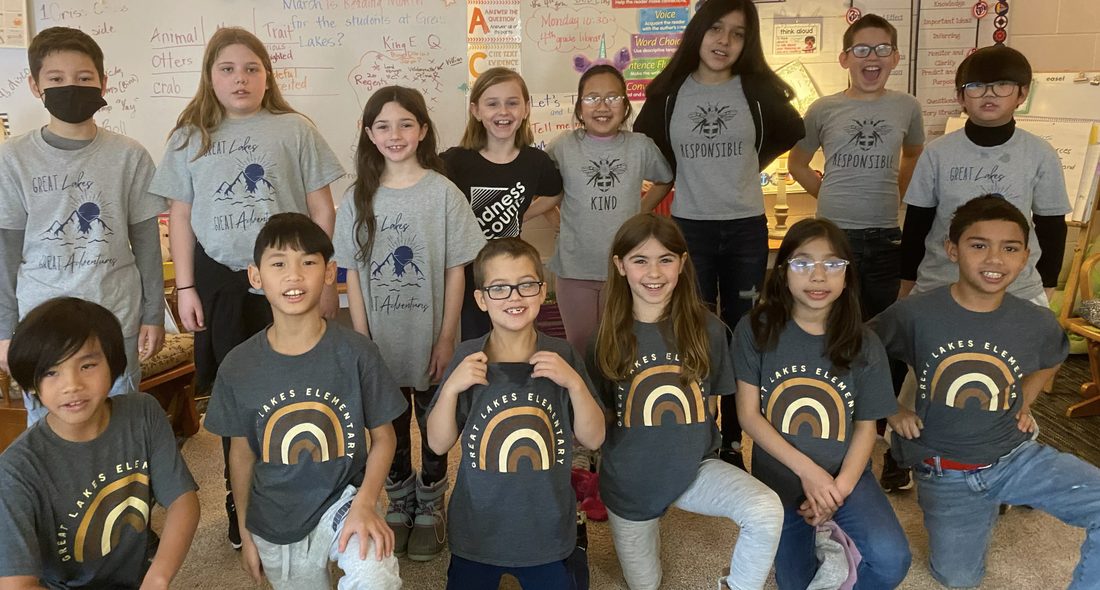
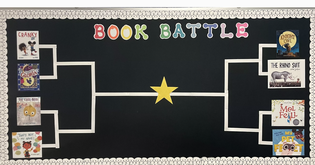
Students at Great Lakes Elementary planned and implemented a SLAY March is Reading Month for their entire student body.  From choosing a theme, reading goals, Dress up Days,  Book Battle Brackets, Awards and prizes, Assemblies, and Celebrations . . . these kids did it all!  The duration of this project was 2.5 months prior to March.  The focus on this project was to allow students to build communication skills, work as a team, build leadership skills, and have authentic ownership over reading
month. 
 

​       
Driving Question:

How can we plan a SLAY March is Reading Month for the Great Lakes students?            

Picture
Picture
Standards:
         Writing:
  • 5.2 Write opinion pieces to support view with reasons and information.
  • 5.7, 5.8, 5.9, 5.10-Research- Build knowledge through resources, extend, connect, and use evidence to communicate.
         Speaking and Listening: 
  • SL5.1.B Follow agreed-upon rules for discussions and carry out assigned roles. 
  • SL5.1.C Pose and respond to specific questions by making comments that contribute to the discussion and elaborate on the remarks of others. 
  • SL5.1.D Review the key ideas expressed and draw conclusions in light of information and knowledge gained from the discussions. 
  • SL5.4 Report on a topic or text or present an opinion, sequencing ideas logically and using appropriate facts and relevant, descriptive details to support main ideas or themes; speak clearly at an understandable pace. 
  • SL5.5 Include multimedia components (e.g., graphics, sound) and visual displays in presentations when appropriate to enhance the development of main ideas or themes.
 Team / Culture Building:
  • Creative Sequence DNA
​Entry Event:
  • Lock Boxes with clues to parts of Reading Month. Such as:  a book, a calendar, a timer, and prize from last year’s reading month.
Picture
Stakeholders:
  • ​Great Lakes Elementary students
  • Teachers
  • Families
Empathy Building:
  • Students will create an Empathy Map for the three stakeholders groups.
Inquiry / Need to Knows:
  • Buglist
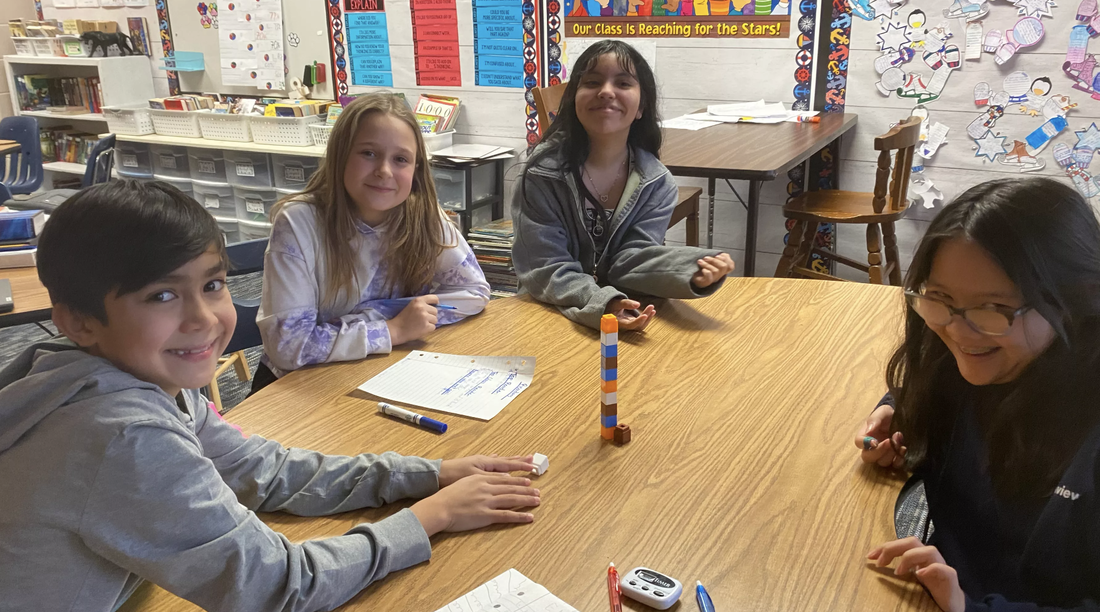
  • Collaboration Tower
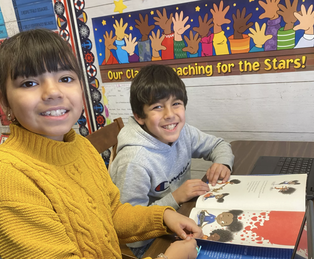
  • The class will read several picture books and rate them using Google forms to determine books for Battle of the Books. ​
Picture
  • Students will Interview and present to the school librarian Dr. Reynolds and Herrick District Librarian Adrienne Baker. These librarians will show  how to make a book talk and read to younger students.
Picture
Picture
Incubation:
  • Rule of Thirds
  • Brainwriting
  • 3-12-3 protocol
  • Crazy Eights
  • Mindmapping
Checking in:
  • Check in and Check Out Circles took place, at a minimum, twice a week during the project. The circle enabled groups  to tackle issues that some students were experiencing and allowed the group to support each other in a positive way. Classes  discussed how the project was proceeding and from that discussion set our next steps in what we needed to accomplish.
  • Using Talking Chips was a great protocol to use for checking in.  Students shared ideas everyone in the group was accountable in contributing to the discussion.  Also, those who have a tendency to over-share were kept in check as to not dominate the conversation.​
Picture
  • Students revisited the BUG LIST to help in narrowing down ideas.

Picture
Solution Building:
  • Students will look at data from the Google Form results for book ratings.​
Picture
  • Dot Voting
  • $100 Test
  • Talking Chips
Critique and Revision: 
  • Critical Friends
  • Pitch
  • Reflection writing
Picture
Authentic Audience:
  • Great Lakes Elementary students
  • Teachers
  • Families
Final Presentation:
  • Students will write persuasive pieces of why they believe they should have a particular role in the performance piece of communicating the solution to the students at Great Lakes Elementary.
  • Groups will perform skits and “commercials” to share components of Reading Month and what will be happening throughout the month.
  • Students will create a video or poster to share their solution ideas.
Picture
Click here for teacher's full plan.

​
Reflection and Feedback:
  • Students and teachers will complete a feedback form.
  •  At the conclusion of the March is Reading Month we will ask for feedback using a similar sheet or Google form to gather specific feedback on all of the components of March is Reading Month. 
  • Reflecting will be done using either a Mood Board, Storyboard, or writing after students have had time to process reflections and feedback and or  Speedboat possibly.​

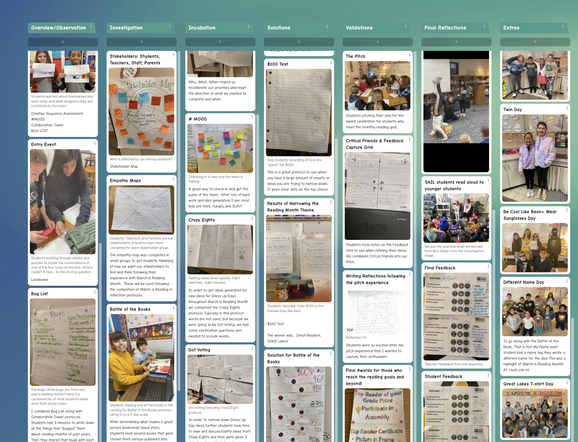
Click here for the teacher's Journey through PBL on Padlet . . .
Picture
Meet the Educator:

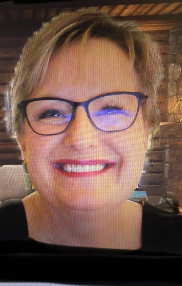
Mary Ritsema teaches 3rd - 5th grade Advanced ELA at Great Lakes Elementary, West Ottawa Public Schools.


     "Project Based Learning is thrilling to me because it engages students in real world work. Students see their work as a solution to a problem.  The Creative Sequence allows learners to experience the different stages of problem solving within a collaborative group.  The careers of the 21st century are vast and some are not developed yet!  No matter what career students pursue in the future, the skills developed through the  PBL experience are applicable and will contribute to the marketing and success of students.  The connection with each other and to the Creative Sequence is what drives my desire to facilitate learning through PBL."

Picture
Picture
Picture
Picture
Picture
Picture
Picture
Proudly powered by Weebly
  • Home
  • Who We Are
  • PBL Experiences
    • ELE PBL Experiences
    • MS PBL Experiences
    • HS PBL Experiences
  • Resources
  • Protocol Examples
  • Community / Industry Partners