West Michigan PBL Network
  • Home
  • Who We Are
  • PBL Experiences
    • ELE PBL Experiences
    • MS PBL Experiences
    • HS PBL Experiences
  • Resources
  • Protocol Examples
  • Community / Industry Partners
                               What's In Our Water?
                                                                           By:  Kevin Conkel

Project at a Glance :

This project is for General Chemistry students learning about atomic structure and properties. The structure of compounds determine their importance in how the substance is understood and used in everyday life.  What is an atom? What is meant by substances (compound, molecules)? What is structure and how does structure determine properties? What connection of atomic structure is evident in water quality.  Possible chemical reactions could be tapped into as well as organic compounds like hydrocarbons.

​Driving Question:


Wait! Don’t Pour That Down The Drain!  Thinking like a chemist, why does what we flush matter?              

Picture
Standards:
  • Skills4Success - Communication, Collaboration, & Global Thinking
  • Science Standards: structure of an atom, ions, isotopes, calculate atomic mass, nuclear stability within an atom’s nucleus, fission vs fusion, structure of compounds/molecules, properties of substances (density, reactivity, BP, FP, MP), lab skills like filtering, precipitation reactions.
Team / Culture Building:
  • Creative Sequence protocol​​
Picture
  • Inner Heroes activity
Entry Event:
  • Students will play a game such as - UNO, Scrabble, or an outdoor game to build camaraderie with each other.
Picture
Stakeholders:
  • Parents
  • Water treatment plant employees
  • Michigan Environmental, Great Lakes, and Energy Commission
  • Chemists in the water treatment labs
  • Environmental Protection Agency​​​​​
Empathy Building:
  • Stakeholders Map
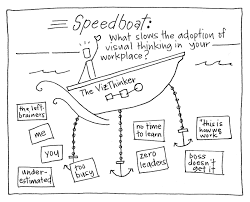
  • Speedboat activity
Picture
  • Empathy map
Inquiry / Need to Knows:
  • Toolkit outline for Need to Knows
  • Interviews with a chemist who works at the water treatment plant in Holland and with college chemistry professors.
Picture
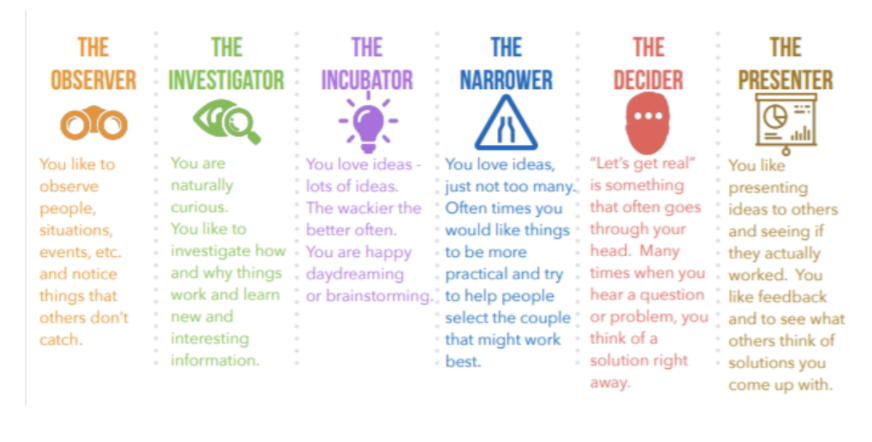
Incubation:​
  • Give students examples from a different Driving Question, Ask students to look at the question from a stakeholder’s perspective.
  • Use Brainwriting protocol
Picture
  • Idea quota protocol to generate solution ideas
  • Apply 3-12-3 strategy to solution ideas
  • What If . . . Were . . . activity
Checking in:
  • Meet with each group once a week (more if need be) and have the group give me an update on where they are in each phase
  • Fishbowl exercise 
  • Pluses & Deltas

Picture
Solution Building:
  • Saturate and Group 100 ideas
  • Dot voting to narrow down to 3 - 5 solution ideas
  • NUF test
Critique and Revision: 
  • ​ $100 test​
Picture
Authentic Audience:
  • Parents
  • Water treatment plant employees
  • Michigan Environmental, Great Lakes, and Energy Commission
  • Chemists in the water treatment labs
  • Environmental Protection Agency
Final Presentation:
  • All students must participate in the presentation and Q&A time.  Demonstration of understanding the question, the solution and the content/chemistry behind the solution.​
Picture
Click here for teacher's full plan.
Reflection and Feedback:
  • Charette model for groups to share with each other and get feedback.  
  • Fireside Chat and the Talking Chip models,  Most likely this will be reflecting within their one groups and the teacher.
  • Rubric showing the  level of understanding of chemistry concepts.
Meet the Educator:
​

Kevin Conkel teaches Chemistry at Hudsonville High School.  

     "My passion for PBL/Design Thinking has derived my teaching philosophy that there is always a better way to get kids to want to learn.   As our generation of students come and go, the learning strategies of students change.  I feel that PBL/Design Thinking might be the next strategy for students to be successful in school and in life."
Picture
Picture
Picture
Picture
Picture
Picture
Proudly powered by Weebly
  • Home
  • Who We Are
  • PBL Experiences
    • ELE PBL Experiences
    • MS PBL Experiences
    • HS PBL Experiences
  • Resources
  • Protocol Examples
  • Community / Industry Partners